


The episode features an engaging conversation with Steven Puri, a seasoned remote team leader with over 20 years of experience, including roles at Dreamworks and 20th Century Fox. Steven shares his journey, including his recent ADHD diagnosis, and imparts valuable tips for maintaining productivity while working from home. They discuss the importance of understanding your chronotype, achieving flow states, and the significance of meaningful work. Steven also elaborates on his productivity platform, The Sukha Company, designed to assist users in staying focused and organised. Tune in for actionable insights and personal stories that can help transform your productivity and work-life balance.
The Sukha Company: https://www.thesukha.co/
00:00 Introduction and ADHD Canvas Overview
01:38 Welcome to the ADHD Goals Podcast
01:45 Challenges of Working from Home with ADHD
02:19 Introducing Steven Puri: Remote Work Expert
04:01 Steven’s ADHD Journey and Productivity Insights
06:24 Overcoming Procrastination and Task Management
13:27 The Sukha Company and Building Positive Cycles
19:46 Creating Effective Work Environments
23:29 The Power of Environmental Cues
23:48 Walt Disney’s Three Rooms of Creativity
26:37 The Trap of Addictive Technology
27:54 Finding Your Productivity System
36:27 Understanding Flow States
43:56 The Importance of Meaningful Work
47:46 Final Thoughts and Farewell
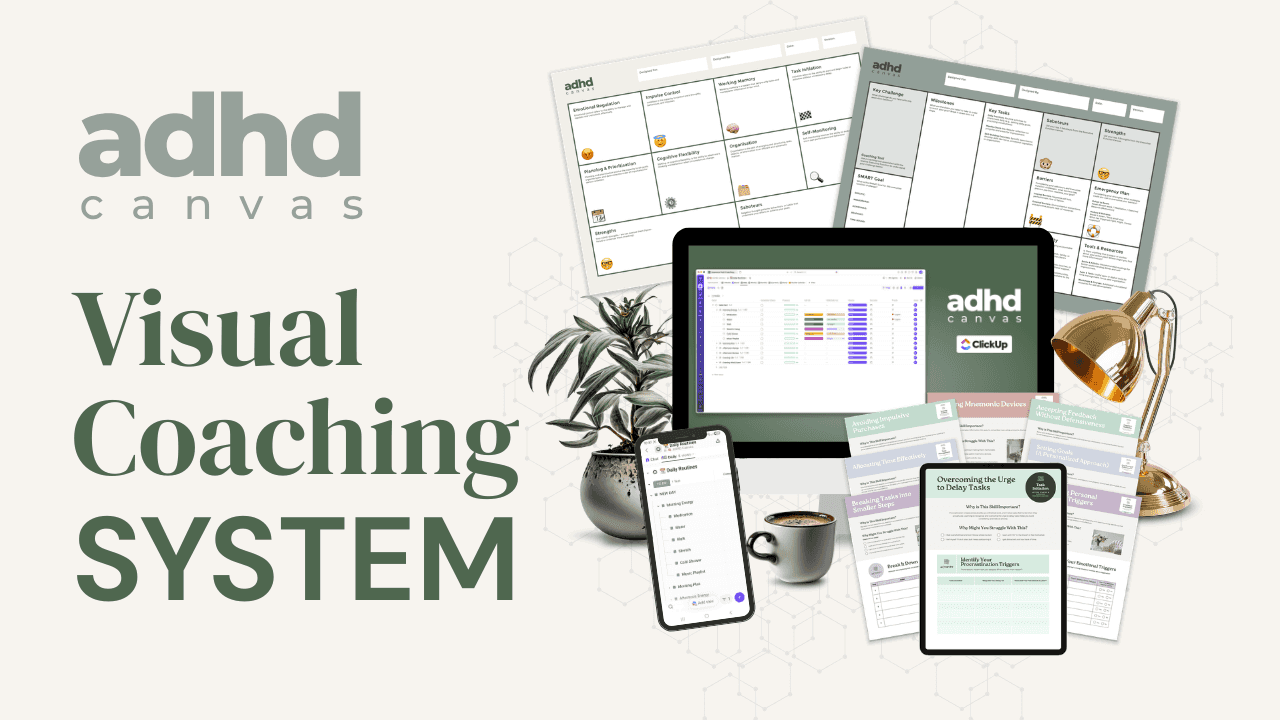
In this episode of the ADHD Goals podcast, Laurence the ADHD Canvas, a unique visual mapping tool designed to help ADHD individuals understand their brains and overcome procrastination.
The ADHD Canvas – 90min 1:1 Intensive Coaching Session
https://go.adhdgoals.co/adhd-canvas-90min
Need Help with your ADHD?
Visit my website: https://adhdgoals.co/
Book a FREE call intro call : https://adhdgoals.co/free-intro-call-booking/
FOLLOW ME
Instagram: https://www.instagram.com/adhd_goals/
TikTok: https://www.tiktok.com/@adhd.goals
Facebook: https://www.facebook.com/adhdgoals/
LinkedIn: https://www.linkedin.com/company/adhd-goals/
Introduction and ADHD Canvas Overview
[00:00:00]
Laurence Pratt: Hey there. AADHD Goals isteners, before we get into today’s episode, have you ever tried productivity tools that claim to be ADHD friendly only to find. That they’re just like all the other neurotypical ones. Yep. Me too. That’s why I created something different. It’s called the ADHD Canvas. It’s a visual mapping tool that helps you make sense of how your unique ADHD brain works.
And in a 90 minute, one-on-one intensive session with me, we’ll use it to figure out what’s really going on behind your procrastination overwhelm or stop start patterns. You’ll finally have that. Aha. That’s why I do that moment.
so when you can see it clearly, you can finally understand how your unique ADHD brain works, and you’ll have access to [00:01:00] over 50 executive function coaching tools to help you build a rock solid action plan that will help you reach your goals.
Sessions are limited, but as listeners of the ADHD goals podcast, you get to jump the queue. So just tap the link in the show notes to book your 90 minute ADHD Canvas intensive session, and let’s get you unstuck now on with the show.
Welcome to the ADHD Goals Podcast
Laurence Pratt: Hello and welcome to another episode of the ADHD Goals podcast.
Challenges of Working from Home with ADHD
Laurence Pratt: Now, if you have ADHD, or for many of us with ADHD, the dream can sometimes be working from home because the office is too noisy and too triggering. Or we might want, want to actually start our [00:02:00] businesses for ourselves because we.
Just can’t fit into those everyday jobs. So here we are, we’re working from home, and then all of a sudden we are hit with a whole load of distractions and a whole new world of problems. Who out there knows what I’m talking about?
Introducing Steven Puri: Remote Work Expert
Laurence Pratt: I, for one, have suffered from that as well, but lucky for us, our guest today, Steven Puri, Now he has spent 20 plus years leading remote teams, and here’s a pretty impressive roll call first as EVP at Dreamworks. Yes, that one and VP at 20th Century Fox. And he’s also been three times a tech CEO. And along the way he has picked up lots and lots of skills and learnings and stories about what makes it successful.
To work remotely. And he also runs a [00:03:00] community of over 34,000 productivity minded people in the Sukha. And so welcome to the show, Steven. How you doing?
Steven Puri (The Sukha Company): Well, happy to be here for those listening in their cars or at home or at the gym, wherever they are. this is a very engaging episode for you. I hope some actionable things you can take to maybe, make your life. A little better. I’ll tell you the thing that I think will be interesting about this episode is I have experience both managing creative teams, you know, in film
Laurence Pratt: well as managing teams in, you know, tech, there are a lot of principles that, you know, Lawrence and I have talked about we can illustrate in really fun ways, like, and that’s how this thing happened, that you may have seen the movie or seen the TV show, something like that.
Steven Puri (The Sukha Company): So hope this is super fun and, thank you for having me on.
Laurence Pratt: Well, it’s a joy to have you on. and so I guess. It would be nice to learn a little bit more [00:04:00] about you.
Steven’s ADHD Journey and Productivity Insights
Laurence Pratt: and first of all, you know, not only have, you done all these wonderful things, but you have a DD right?
Steven Puri (The Sukha Company): In the process of creating the Suga company. number of ADHD coaches are in the community. And one of ’em approached me at a certain point and said, Steven, have you ever been DI diagnosed? And I was like, no, I have not. She’s like, I’m just gonna call this one. You should probably go and find out because I, I think you present in a lot of ways that our a DD
Laurence Pratt: Yeah,
Steven Puri (The Sukha Company): so much presenting the hyperactivity, but, a lot of the other ones, and I did, she was spot on. Ariana. Bradford, by the way, she runs, uh,
Laurence Pratt: Uhhuh.
Steven Puri (The Sukha Company): She was absolutely right. So how coincidental did I created a platform to help me focus and I have ADD.
Laurence Pratt: Yeah. Well, I mean, it’s reassuring, I think because a lot of people, maybe if they’re coming to their ADHD journey later on in life, certainly they’ve experienced it [00:05:00] all their lives, but they haven’t been able to understand or put a label on it. And, usually, or typically they might be coming because approaching this.
Journey because they’re stuck. And I think sometimes it’s reassuring to see that there are people out there with ADHD or a DD who have managed to on, on the surface appear to lead successful lives. And, and I suppose we’d really like to tap in to, what has helped you to,
we were chatting just before, before we pressed record, and there’s a synergy between both of us. We tend to focus on our weak spots. So productivity, I’m presuming is, has been a challenge for you, so tell me about that.
Steven Puri (The Sukha Company): it has, uh, well, first let me say that look forward to more successes. I think the story is being written. I’ve had failures and successes. Probably the biggest successes. I’m gonna be a dad this fall,
Laurence Pratt: Wow.
Steven Puri (The Sukha Company): [00:06:00] super excited about. I hope I do it well. hope I don’t drop my son on his head,
Laurence Pratt: huh.
Steven Puri (The Sukha Company): let’s hope for the best. So that said, me tell you that I know that necessity is the mother invention for me, pain has been the mother invention.
Laurence Pratt: Yeah.
Steven Puri (The Sukha Company): And I’ll describe a couple things. I would love to know if you’ve experienced these two, which I’ve heard you talk about in other episodes.
Overcoming Procrastination and Task Management
Steven Puri (The Sukha Company): And of course, anyone listening in their car can nod their head and they’re like, yes. of the big problems that I felt, one of the pain points I felt was what I now call the cold start problem. Tomorrow morning, I’m going to, at nine start the thing I need to do that’s important and get to work, blah, blah. And at nine 15 I would find myself returning emails maybe didn’t even be returned or scrolling or something like that. you ever done that? Not start on time and find yourself procrastinating.
Laurence Pratt: Oh, absolutely. I mean, that would be a daily occurrence. it’s re only recently started to [00:07:00] change because again, I’ve built a system out of necessity to engage me in what matters. but yeah, carry on.
Steven Puri (The Sukha Company): So true. Okay, so I had that problem
Laurence Pratt: Yeah.
Steven Puri (The Sukha Company): of it was a little bit in the morning. It would be like, oh, it’s nine 30. I’m like, I just gotta get going at nine. I need to do this thing. Even worse at the end of the day. And I’d be like, Ugh, I didn’t finish. I’m
Laurence Pratt: Hmm.
Steven Puri (The Sukha Company): I’m a bad person, you know? Oh. then tell myself to lie, oh, well I’ll get up early tomorrow and finish today’s work tomorrow before starting tomorrow’s work. And you know, that’s just Domino’s through the week where it’s like, and then Tuesday night you don’t finish Tuesday’s work and then Wednesday, you know, that sort of thing. This really bothered me and got me down on myself and. So I did the thing of, you know, asking the, the why’s, like the, the layers of the onion you peel
Laurence Pratt: Mm.
Steven Puri (The Sukha Company): Okay. I’m a smart enough person to know. I can say I’m gonna start at 9:00 AM tomorrow,
Laurence Pratt: but I’m not. So what happens [00:08:00] at 9:00 AM Well, I procrastinate. Why? Well, I found that I felt overwhelmed. well why do I feel overwhelmed? And when I dug down, it was one of two things. Sometimes both. It was. at my task list and saying, oh my God, there’s 17 things on here. I’m not gonna get all 17 done before my, you know, 11:00 AM with Lawrence or something. You know? it almost becomes paralyzing.
Yeah.
Steven Puri (The Sukha Company): you know, if you have neurodivergence, having 17 things staring at the face can also lead you to thinking you’re gonna multitask and jump around.
You don’t finish one thing, you do another, and just a whole bunch of problems. Right.
Laurence Pratt: Yeah.
Steven Puri (The Sukha Company): And the other part of the overwhelm was. Sometimes there was something on the list. There was just, there’s no way to accomplish it in this, you know, next session. You know, write my book. I’m not gonna write the book between now and 11:00 AM you know, but I wrote it down as if it were a task and you did a great episode talking about breaking things down into granular pieces, you know, and, and [00:09:00] time blocking.
So you what I did was built a, you know, a little website that I use and a lot of other people use now. you can have your task list, it’ll save all your tasks. And there’s a bucket for this session. So when I start my day, I can go in there and smart assistant, you know, an A LM and AI look at my task list with me and say, Hey, it seems like these are the three priorities today.
Am I
Laurence Pratt: I can say yes, or I can say, no, actually this is more important. This should be one of my three things. And then as soon as I hit play. It, you know, blocks my computer and my, you know, flow music plays and all the nice things happen, right? I can only see those three things.
Mm-hmm.
Steven Puri (The Sukha Company): It hides the other 14.
So I don’t do the bounce around and try and like multitask on stuff and suddenly it becomes much more doable. And I’ll mention this after we built this thing where when you start, it just shows you your top three things. Our [00:10:00] members are 77% more likely to finish all three. Before when they could see all 17,
Laurence Pratt: Yeah.
Steven Puri (The Sukha Company): And it’s just simply that thing of paralysis of there are too many things to look at. I’m overwhelmed, or you know, let me multitask and try and pick things off the list and do them out of order and things like that. And the other thing is if, if my smart assistant sees there’s something stupid on there, like the new app, write my book. It does exactly what you said in your episode. It says, Hey, you know what, Steven, great goal. Why don’t we make a task that’s more granular, like outline chapter three. I
Laurence Pratt: Yeah.
Steven Puri (The Sukha Company): outlines for chapters one and two, it took you about 30 minutes. Why don’t we make a task today? It’s just outline chapter three in 30 minutes. And you know, like you said, once you start to time box, it really helps you overcome that. Again, neurodivergent sense of there’s two times, there’s now and not now.
Laurence Pratt: And suddenly you’re allowed to say, oh, [00:11:00] you know what, in 30 minutes, yeah, I can do this.it begins a cycle of feeling good as opposed to feeling bad.
Steven Puri (The Sukha Company): And that for me was a huge part of starting my day. There are other things we can talk
Laurence Pratt: Yeah.
Steven Puri (The Sukha Company): a very painful one for me of just like, I’m sick of having six o’clocks where I’m like, ah, I didn’t get it all done. I’m an idiot. You know?
Laurence Pratt: Well, I absolutely agree with, you know, I’ve done all those things. You know, part of the procrastination is because I’m not looking forward to this mess of a to-do list.
and what I’ve found recently or what I’ve tried to build into my, my current workflow is. The way you start your day is rather dependent on how well you finished the day before.
true.
as in you, you identified this, which I still do, is I put a task list, a task on the task list that is an entire project or even a business that I’ve decided I’m gonna start,
Steven Puri (The Sukha Company): restaurant.
Laurence Pratt: yeah.
Steven Puri (The Sukha Company): an hour.
Laurence Pratt: and so you can start [00:12:00] getting, going through that task blind to the fact that this is a project
and you’ll keep going and keep going because we’re resilient.
But that if you then finish the day with it unresolved you, that’s what’s causes the next day to say, I, there’s something about the starting tomorrow I don’t like. and I suppose what I’m trying to say is that by actually putting in like an alarm to say. you know, checkout of the afternoon, I can then say, I’ve not finished that task.
Why haven’t I finished that task? Oh, because it’s a massive project, okay? Right? So I need to break this down so then you can forgive yourself. Give yourself a chance to say, no, you haven’t failed because you did X, Y, and Z. if you’d have counted those as tasks, you would’ve actually done loads, but you don’t see it as doing loads because you didn’t do that one big thing.
Yeah. So,
Steven Puri (The Sukha Company): very true. Something else implicit in what you’re saying that I want to hang a lantern on,
Laurence Pratt: is [00:13:00] you can build Self-reinforcing cycles. You
a cycle of six o’clock. Oh, I didn’t finish. I’m a terrible person. I’m not good at what I do. Da, da, da. And it just like the negativity breeds negativity.
Steven Puri (The Sukha Company): And you bring that into the next day or you can build a cycle of, wow, I set these granular specific things. I knocked them out. I decimated my task list. I feel great. I can’t wait to get into tomorrow. And.
The Sukha Company and Building Positive Cycles
Steven Puri (The Sukha Company): Those things perpetuate, like the messages you tell yourself are
Laurence Pratt: that for me was a, a really big matter of fact, I don’t know, you and I talked about this, but I named my company the Sukha Company. Sukha is a Sanskrit and we. My wife and I met in yoga, right? I married the girl to my left on a yoga mat I met 10 years ago in, in Manhattan, and we have a daily yoga practice. It’s part of our life. I love the one hour where I can’t even think about anything else [00:14:00] because I’m just trying to balance, you know, and not fall over and look like an idiot in front of
hard and it’s physical and it’s spiritual, and it’s like really good, right? So got married. When on our honeymoon, Bali is a really nice place to go if you do yoga. It’s like very chill and barn and all the yoga culture there, right? So we’re going in there. I told Laura, I was like, you know what?
Steven Puri (The Sukha Company): We have a working title for this, app that I’m building. I wonder if in these 10 days we’re away when no one’s gonna bug me. If like the universe speaks to me and gives me a great name. You know, the way Amazon’s not really about books. Nike’s not really about, you know, Greek gods, you know, sort of thing. Or about shoes. so she said, you know, I wish that for you. we got there and I said, I think for my unconscious mind to bubble this up, maybe I should speak to a couple of my early members and just say like, what do you like about this? Like, how does it help you? And I didn’t know I was a DD at this point, right? So. I did three like quick zooms and the third zoom. I was going to the wrap up. You know, we were like, how old Lawrence? Thank you. I just wanted 10 minutes. [00:15:00] Really appreciate your time. You know, tell me thanks for telling about your favorite features, the Pomodora tolerance,
Laurence Pratt: the guy said to me, and he still remember, he said, Steven, you asked the wrong questions. And I was like, okay, what was the right question? He’s like, you should have asked me why I paid you.
oh.
Steven Puri (The Sukha Company): like, it’s like 30 cents a day, like it’s not a broken bag. I didn’t know that was a big deal. He’s like, let me tell you something. I found I can have three o’clocks where I’m playing with my kids.
They’re two and four,
Laurence Pratt: or I can have six o’clocks where I’m like, where the hell did the day go?
He said, the difference is, did I start the day with your app? so I pay you because my kids are not gonna be two and four forever. And I was like. Wow. That is, wow. Thank you.
gives me a lot to think about.
Steven Puri (The Sukha Company): So I had dinner with Laura that night. The first time I went night I was like, oh my God, I spoke to this guy who’s more articulate about what I’m doing than I am, right? And she’s like, that’s really good. So at night she said to me, you know what it is, handed you that concept that we hear in Yoga Suko.
You know, the [00:16:00] happiness, like the, when you feel self-fulfilled, when you’re in your lane doing something, you’re good at it and you can do it with ease. She’s like, you asked the universe to speak to you. It did. I went to bed that night from my phone I looked to see is the Sukha company, the happiness company, available, and I just bought the domain from bed that night, and that’s why I named the company this.
So to bring it all full circle, it is these circles. It’s these patterns that we train ourselves in. Either I’m an idiot, I’m no good, I can’t focus, dah, and that perpetuates, or. Wow, I am really good at this and it feels good, and I wanna have time in the afternoon to play with my kids, or go windsurf or whatever your thing is.
Obviously I’m
Laurence Pratt: a dad in five
Yeah.there was so many things in there that have started new threads of questions. But what I did like, but what I did like was, the moment when the guy turned around and said, and said, you’re asking the wrong questions. And what I liked about that is, is [00:17:00] because it resonates with something that I feel strongly about in terms of.
A learning mindset. You, you had set yourself the task of saying, I want to ask these questions because these are informa, this is information that I need to know. And then he stopped you and said, no, you, you’ve got it wrong. and at that po it’s not a perfect analogy, but you can think of other situations where that has happened that could immediately be a red flag to you and say, oh, failed.
And damn, you know, that’s not great. but you can sort of. Roll with it, you know, and say, oh, okay, I’m gonna learn something new here and this might actually take me in the, in, in, in a better direction. and I, and I think that forgiving learning mindset, being open to the fact that you are not failing, you are learning how to go forward, better.
because I, I was literally having, you know, to tie the two things together, what we were talking about earlier about, you know, the never ending day or a massive project. I was trying to, I was trying to, I [00:18:00] get through one of those big tasks and I realized I’d written a massive to-do list for this one task, and I had to tell myself, oh, I need to change what my expectations are here.
I. I am not going to create the perfect system right now. I, in order for me to succeed and get this test done, I need to say, this is what I know now and this is what I don’t know, so I’m gonna leave myself like I. The opportunity to go through that process when it comes and figure out what it is, and I will write that down as what it is.
I don’t have to build, you know, all the boxes and everything and make it a polished thing because I think the fear is that if I put something out there that isn’t perfect, people are gonna. Say this is rubbish and it’s not. And perfectionism again, is, is one of those huge things about procrastination because if you, if you, if it’s not perfect, you’re scared of putting it out,
Steven Puri (The Sukha Company): Yes.
Laurence Pratt: but there, it’s an [00:19:00] opportunity there to learn from the feedback.
Steven Puri (The Sukha Company): And it’s a growth mindset and I think it the quick, you know, if we can adjust. concept.
Laurence Pratt: all works and progress.
Steven Puri (The Sukha Company): yeah. Exactly.so I wonder. What else can you tell us about, because I mean, when you started describing, some of the tools that you got, within am, am I assuming that the tools all belong in the Sukha community, or is that something else that there are a ton of things in the Sukha that are developed. Obviously I needed help because of a DD. Right.
Laurence Pratt: yeah.
Steven Puri (The Sukha Company): So all the things I mentioned, the focus music, the timers, the tasks, the smart assistant, it’s all there. But there are some things that you can do for free. You don’t need any apps. And by the way, there are a lot of great apps out there that are not mine.
Like find the one that works for you.
Creating Effective Work Environments
Steven Puri (The Sukha Company): But let me give you an example, and this is one that I noticed early on in my film days, which is, as you know, worked on Independence Day, producing the, the digital effects for Independence Day,
Laurence Pratt: the director and producer and I had [00:20:00] set up a company to do this so. They’d come off doing like Universal Soldier and Stargates, some of the movies. And Roland, the director, loved this house, this villa down in Puerto Verta, never been there apparent, beautiful white marble with the thing in the pool and all that. And they talked about they would go down there to write their scripts, right?
Steven Puri (The Sukha Company): They would go block it out for a month and just live down there and they talk in the morning, the light comes in over the pool in this one room and was very inspiring to ’em, right. So when they were going off to write, you know, the, this one, Roland asked his assistant to book it and she came back and said, someone’s already booked it this month.
Laurence Pratt: Uhhuh.
Steven Puri (The Sukha Company): like an Airbnb kind of thing. It’s like
Laurence Pratt: Yeah.
Steven Puri (The Sukha Company): it first, right? It was around the office like, oh my God, what’s gonna happen? This is like their thing, right? And Roland ended up buying the house. He called, his attorney was like, buy the Villa by Monday. He owned a villain part of art, and whoever was renting, they were not there.
I don’t know where they went. I’m sure they were paid nicely to find a new villa, but they were [00:21:00] gone. Right.
Laurence Pratt: Yeah.
Steven Puri (The Sukha Company): And the guys went down and wrote, and they wrote, the third highest grossing movie in film history at that point. Right. It was their thing. And what it taught me when I was talking to Dean, who was the writer, producer. I was like, so tell me more about that. He is like, well, there’s something about being there in that space. We’ve kind of trained our minds that that’s where a lot of the business part of film falls away. We’re not thinking about our agents. We’re not thinking about what actors, you know, what dinners we need to go to, what premiere I. She’s like, there’s some now being there, we’ve retrained ourselves. We get in there and it’s writing mode and all we think about are great movies. We’ve seen how those characters and those scenes worked, and how do we make a similar thing work? And our, I was like, ah, super interesting. Can I tell you, I have seen that true so many times when you start to train your mind about, here’s how I do something.
And it doesn’t have to be a luxury villa. I’ll tell you this. I was, uh, working with Alex Kurtzman, Bob Wari, uh, you know, when I was in Dreamworks.
Laurence Pratt: Mm-hmm.
Steven Puri (The Sukha Company): You know, they’ve ridden how many billions of dollars A box office. [00:22:00] Transformers one and two Star Trek Mission Possible three. Zorro, the island. I mean like incredibly successful writers, right? When they got down to, you know, that crunch time, they had their assistant rent a room across the lot. ’cause we were on the little Amblin compound on the Universal Studios lot. Right across the street was the universal Hilton. They would rent a room there. And it’s not a luxury property, I’m just gonna tell you.
It’s
Laurence Pratt: Yeah.
and stay with your kids when you’re going on the rides at Universal Studios. Right. Yeah.
Steven Puri (The Sukha Company): serviceable. But that was where they would go and write transformers and stuff like this. And what I realized was they had met back in school. So that kind of room, I think evoked dorm room for them
Laurence Pratt: of ’em would be sitting on the edge of the bed with the laptop.
Steven Puri (The Sukha Company): The other was at the little desk writing on their laptop and that was their way of getting into that state. So the reason I share this is free thing you can do at home and it corrects an error a lot of us make, which is you are working [00:23:00] remotely. You can say, this is the space where I do X.
Whether you are a blogger and you write, or you are an accountant, or whatever. Whatever it is that you do. But you start to not just do that freely wherever. Like I used to work in the kitchen in the morning and then at my desk around midday, and at the end of the day I’d be on the sofa, right? And it was sort of a chaotic experience. Whereas now when I’m going to do a certain kind of work, I come here to my desk and I sit. My mind immediately falls into, oh, we’re here.
The Power of Environmental Cues
Steven Puri (The Sukha Company): We’re not thinking about the laundry. We’re not thinking about, you know, going to yoga later. We’re not thinking about, we’re very focused. it’s amazing the way that the brain responds to little cues like that the same way music can bring us to
Laurence Pratt: place.
Steven Puri (The Sukha Company): So I share that as just a free
Laurence Pratt: Yeah.
Steven Puri (The Sukha Company): some people also use aromatherapy as a trigger.
Walt Disney’s Three Rooms of Creativity
Laurence Pratt: It reminds me of a story that I have quite often told because I heard it, and I dunno if it’s true, but I’ve heard it a few times and, and I’ve never actually spoken to somebody [00:24:00] who’s actually, perhaps worked as close to the vicinity of that, of this world.
Steven Puri (The Sukha Company): but I heard that Walt Disney used to have three rooms.
Laurence Pratt: Where he would, basically process his ideas. and I, I, I’m assuming because it was Walt Disney, that these rooms were physical, not metaphorical. Uh, but he had one room that was where anything is possible and nobody is allowed to say no. And he has his ideas and he goes, this, this could be this, this could be this, this could be this.
And then he goes, takes that idea into the next room, which is to say that won’t work. And then he, he changes his mindset and he says, no, this won’t work because of X, Y, and Z. And then in the third room he says, well, if, if it won’t work, how can we make it work?and so what, why that struck me [00:25:00] is because.
I think there’s lots of things there, but the, the room that you are in can shape your thinking, but also the importance of pushing everything else away that is likely to stop you from having an idea or an innovative idea and the importance of having people. Well, you know, like if you’re doing improv or something like that, it’s, it’s, yes.
And rather than, uh, no, because as soon as you somebody hears the word no, they shut down and go, oh, well I’m not gonna have another idea because I don’t wanna embarrass myself. And so. If you can reassure everybody, we Yeah. We’re gonna get to the bit where we, we are gonna find out how much it’s gonna cost.
Uh, but let’s, let’s dream a little bit first and, and it, and I think it’s really important and I think that maybe in the story that you’re saying, there’s an element of we feel the possibility in that room and let’s make it happen.
Steven Puri (The Sukha Company): You know what the [00:26:00] three rooms thing, whether it’s apocryphal or not,
Laurence Pratt: Yeah.
Steven Puri (The Sukha Company): that’s really interesting. I’ve never heard that before. in film for a while. It could be true. but the idea is absolutely amazing. Like that’s great.
Laurence Pratt: Yeah.
Steven Puri (The Sukha Company): that process. Even if they’re metaphorical rooms.
Laurence Pratt: Yeah, well, e even if it’s not true, you could steal it and say Yeah, yeah. The kitchen, the kit, the kitchen,
Steven Puri (The Sukha Company): and I were young, this is what we would do.
Laurence Pratt: the kit, the kitchen is where I have my ideas. The, the office is where I say that’s all gonna happen. And then, uh, you know, in the garden is where I fix it all up.
Steven Puri (The Sukha Company): Yeah.
Laurence Pratt: Okay.
The Trap of Addictive Technology
Steven Puri (The Sukha Company): even tell you. And I’ll tell you, one of the things I noticed about the sofa was I associated the sofa. With being relaxed, somewhat lazy, scrolling, like those sort of behaviors.
Laurence Pratt: that I wasted more time on the sofa of that association. And you know, let me be super blunt. Some of the [00:27:00] best paying jobs, if you are a UI designer, a behavioral psychologist, and uh, engineer developer are for companies where their business model is steal your life.
Full stop. That is their business model. I would like to steal your life. I’d like to sell it to this advertiser, and I’ll keep the money.
Steven Puri (The Sukha Company): Thank you for your life.
Laurence Pratt: And that’s astounding when you think about it. And for that reason, you have really beautiful, beautiful user experiences that are designed to keep you addicted. Nir Eyal you know, has written some great stuff on internal and external triggers. And if you. Fall victim to that, which I have, I’ve done that thing of like, well, I’m just gonna scroll for five minutes and like 35 minutes go by.
Steven Puri (The Sukha Company): You know, like, oh wow. I kind of lost momentum. I blew a hole in my afternoon. ’cause I just sat down for a minute and thought, well, I’ll just do this as a break.
that’s a big one.
Finding Your Productivity System
Steven Puri (The Sukha Company): And it’s really hard, like a lot of why I’m doing what I do now and why I speak, you know, so frequently is [00:28:00] to share ideas, to say, Hey, like, get your life back. Don’t put your life in the hands of people who are just to sell the days of your life, because no matter how rich you get, you can’t get more time.
Laurence Pratt: exactly. And it reminds me of, you know, you know, jobs that I’ve had where. Definitely if I, I, I don’t know whether it was the culture that, as you put it, the culture wanted, demanded that, or whether, because I didn’t know I had ADHD at that point. It was just my trying to paper over the cracks that I just couldn’t stop.
And it reminds me also about what you said, that, A member of your community said to you is that, you know, it gives me back my life and my time with my kids
Steven Puri (The Sukha Company): Yeah.
Laurence Pratt: and I’ve been trying to find out that, find where that line is where I can reassure my, uh, you know, my chimp mind to [00:29:00] say. No, I, I, I have captured all of those things, those ideas that you keep throwing up there.
I’ve captured them and I will get to them. but they don’t need to be right in front of me right now. And because I think that’s when you can find yourself continually working because you, you dunno when it’s gonna end or you don’t feel like you’re achieving what you need to do to deserve that break.
And Yeah, and so I, I, I think what I’m trying to say is if you can find yourself a reliable system that that allows you to have those whims and those ideas, but not make that idea a priority, but reassure yourself that it’s safe. You don’t have to think about it. It takes it out of your brain and, and keeps it safe somewhere for another, another time.
I think that can sometimes be reassuring Another.
Steven Puri (The Sukha Company): research around the zig garlic effect and that concept of like, how many things do you hold in your memory? What do you write down? How do you organize it? I’ll tell you, it [00:30:00] is not inconsequential. It’s a bad double negative. it’s consequential there. It’s somewhere my eighth grade grammar teacher just being happier. The amount of energy that you spend holding things like a task list in your mind, it’s really helpful to jot it down, whether you use pencil on paper or you use an app, whatever, get those things down and then once they’re down, it also helps you with that stuff of prioritization, which, you know, you’ve talked about. You know, knowing where you start is really important and you know, the. The theory of Eat the Frog, right? The
Laurence Pratt: Yeah. Yeah.
Steven Puri (The Sukha Company): of like, you know, start with the hardest thing in the morning, blah, blah, blah. I will tell you this, and this runs contrary to what a lot of people say. I understand. Eat the frog.
I’ve tried it and I found that for me, it actually doesn’t work. As well as giving myself one or two quick wins, like
Laurence Pratt: in 15, 20 minutes I can knock some things out because I found [00:31:00] for me the momentum. Of like seeing things disappear off my task list actually gives me that power to get through the rest of the morning or the rest of, you know, the day, more than spending an hour and a half on the really ugly thing first.
Steven Puri (The Sukha Company): it’s just how I’m wired. And I think a lot of what, uh, should strive for is just know thine self. No. Are you an eat the frog person? Is that your magic thing or is it a momentum thing? same way knowing about day parts. I’ll give you an example. Uh, I know you wanna jump in. I’ll make this a quick
Laurence Pratt: Hmm.
Steven Puri (The Sukha Company): but knowing about chronotype, like at what time of day do you do things well,
Laurence Pratt: there’s a famous screenwriter, Ron Bass, who was an attorney turned screenwriter, ridden roles that, you know, major movie stars have played. And he at a certain point told his family, Hey, I can’t talk to you in the morning. Like, daddy’s not gonna ask you what kind of cereal you want. Did you do your homework? How you get into school? Like until about nine need to go write. [00:32:00] to them, I can’t hear my character’s voices once I’ve started talking with you. So when I wake up in the morning, this is my chronotype is like, I need to write down these things. And. He’s ridden the character dialogue that gets Julia Roberts, Dustin Hoffman, Tom Cruise, like certain Rainman, and you know, my best friend’s wedding and like all this stuff where those actors, they have a pile of scripts with $20 million checks stapled on their desk and they get to choose and somehow they choose his words and he is like, it’s because I understand my chronotype.
Steven Puri (The Sukha Company): Like I need to have five to 9:00 AM. Without even acknowledging my family. So I could hear how Julia would say this or how Dustin would say this. anyway, you were about to say something a moment ago. I rudely kept speaking.
Laurence Pratt: It was, it was going back to the, the eat the frog and you know, you, it just reminded me of, you know, productivity hacks or tips that you see online [00:33:00] and the importance of, for somebody with ADHD. To not necessarily assume that every productivity hack or tip on the internet is actually going to be for you.
and you are not a failure if you can’t work in that way. because I, I think I agree with you in terms of. You know, if I start the biggest task of the day, or the most you know, it, it’s probably because I haven’t broken it down and I can make it last all day, so I won’t do anything else.
and I certainly agree with you, you know, the momentum thing can be such a, a great catalyst because you’re saying I’m, I’m good. Look, I just, I even, I sometimes have to, I love having, when I can’t be bothered to use my sort of digital system, I, I’ve got little post-it notes and I love sticking them there and then transferring them to a pile here.
And like,
Steven Puri (The Sukha Company): It’s satisfying, right?
Laurence Pratt: and sometimes I might, I, I write small, you know, as [00:34:00] tiny little tasks on there so I could see the pile go, Woohoo, get little big.
Steven Puri (The Sukha Company): Lawrence, creating quick wins for yourself. It is nothing to laugh about. It
Laurence Pratt: yeah.
Steven Puri (The Sukha Company): I’m
Laurence Pratt: Yeah.
Steven Puri (The Sukha Company): does like life is short. Let us find ways each day to delight ourselves. You know,one of the things like when you complete a task in the Sukha and you click the little complete thing, you get a little confetti.
Laurence Pratt: Yeah.
it change anything? No. it make you feel better? Yeah. Yeah.
Steven Puri (The Sukha Company): and it’s like those little things where you just go, Hey man, look at this pile of Post-it notes. It makes you feel good. They’re just post-it notes, you’ve collected those wins. You go, actually, I am good at this.
Laurence Pratt: I’m in my lane.
Steven Puri (The Sukha Company): I’m doing what I’m meant to do. I do with ease.
Laurence Pratt: that I think is a really great thing because we will never get today again.
today a day that reinforces for us, Hey man, I feel good. I. We deserve that.
Yeah, I think it’s, it’s really, really good. I mean, I, what I was gonna [00:35:00] say is I think it’s really good to understand the, what I’m, what’s the word that I’m looking for? Is the novelty of things when you have ADHD is that even though you might find a system that works, there might come a time further down the road where you’re just bored of that and therefore it stops working and therefore, again, like that learning, you know, the learning mindset is to say.
Okay, the, I’m really struggling to do this because I’m bored. So what are the options? Have I got and forgive myself for maybe not doing the important thing, but doing something and know that, you know, okay, maybe I’ve gotta juggle things around and, and try see what works again.but yeah, understanding that that novelty will throw a banner in the works at some point.
Steven Puri (The Sukha Company): Right.
Laurence Pratt: So I’m just curious. In the time that we’ve got left, I’m, I’m thinking of the [00:36:00] listeners and want to give them something, you know, if they’ve worked from home or remote working, that tomorrow they’re thinking to themselves, well, maybe I’m gonna try that. I wonder if the, if this is the best question to ask, are there things that you are doing now that you perhaps weren’t doing 10 years ago that you have, you know, have changed your productivity?
Steven Puri (The Sukha Company): fantastic question and I can tell you.
Understanding Flow States
Steven Puri (The Sukha Company): The biggest thing that I do now that helps me to be happy, which is I learned what a flow state is and how it applies for me. And I’ll tell you, when I had my first experience not knowing what it was, ’cause it’s different than hyperfocus, right? I was flying, I live in Austin, Lauren and I live here, but I was going to SF to meet with my team and on the flight, wanted to do some Figma designs of a feature that I wanted to illustrate. So we took off and we [00:37:00] landed and I was like, oh my God, something’s horribly wrong. The engine fell off. We must have landed in Dallas. And they’re about to tell us like, sorry, we can’t continue the flight, right? We were in sf. I completely missed two hours and 40 minutes, like just no conception of the drink, cart of anything happening. But my designs were done and I was like, what just happened? Where like I was concentrated. And sort of the time fell away, the world fell away. There was no annoying, I couldn’t even tell you who was sitting in the seat next to me, I at that point was free to get off the plane and not run to my hotel to try and finish my designs for tomorrow morning’s meeting.
Laurence Pratt: go to dinner and there’s a great lobster roll place right by San Francisco Airport that I love. So I was like, I’m gonna go have a lobster roll. It’s
So I say all this because anything I’m about to say. Is not my being smart. It is my having read books by the smart people because a number of people have written about this, right? The seminal book about [00:38:00] this, where the name comes from is a Hungarian American psychologist. Miha wrote a book called Flow, and his thesis was super simple. There are high performers who get into this weird concentrated state where they do great things for their career or for the world. How do they do it?
Steven Puri (The Sukha Company): What is it? Let me figure it out. Right? So he ended up calling this thing flow because he said, I like the metaphor that you can be paddling in sort of of your own power, like move forward. when you get on the river and the river starts to carry you forward and like magnify your efforts, that’s a flow state.
Laurence Pratt: So. Many people have different words for this. Michael Jordan has the famous quote about, uh, being in the zone where he is, like, when I’m in the zone, it’s me in the ball. And it’s like, there are no defenders, there’s no scoreboard. It’s just I’m in the NBA finals, it’s me in the ball, I’m gonna win. Right? Or there’s a great possible quote I always mangle about, you know how he stayed up all night and he was like, whoops, I didn’t eat, didn’t drink, uh, didn’t [00:39:00] go the bathroom, but you know, it painted tica.
Steven Puri (The Sukha Company): What do you think? Is it nice? You like it? You know, and it’s that sense of. How do I harness that? That he, like Prometheus was like, let me bring fire down to the common people. Like, okay, if they can do it, how do we do that? And there are some simple concepts, and again, they’re free. You don’t need to buy anyone’s app, you don’t need to buy anyone’s book.
You can just exercise these things where he said, what I found to be true about flow states, is they are, when you’re doing something and you have a particular skill set that applies to it. So it’s not Michael Jordan painting. It’s not Picasso playing basketball, right? It has to be challenging. It’s not, you know, Michael Jordan playing with eighth graders or something. It is Michael Jordan playing in the NBA where you were challenged, you were the edge of your skills and you need to do this well to be there, right? So for me, Figma is challenging. Like illustrating this thing was challenging to me or I was concentrated and man, two hours and 40 minutes felt like 10.
Laurence Pratt: And he [00:40:00] said, you have to believe it’s meaningful, like. You’re
Yeah.
Steven Puri (The Sukha Company): flow state like stapling reports together. You know you are going to have to believe that what you do is gonna somehow affect your life, the lives of others, right? And so many people now have written about how music sometimes is a good hack to get into flow.
And I
Laurence Pratt: actually really nice headphones on, and I do not. you find there are certain things that work for you, a lot of research says middle of the road is. There’s 60 to 90 beats per minute, of certain key signatures, ambient non-vocal music that helps you just, your brain kind of like block out the world and get into that place, right?
Steven Puri (The Sukha Company): We all have the friend to get into the flow state, like needs to listen to nineties gangster rap and god bless them, like they’re the outlier,
Laurence Pratt: Yeah.
Steven Puri (The Sukha Company): death, metal, whatever, whatever they are, right? But there are like middle of the road sort of things. ended up, you know, getting a thousand hours of that from friends who were film composers. Threw it in the [00:41:00] app. It’s like, oh,
Laurence Pratt: to these different playlists, Brain FM and Dell, you can find on YouTube
Yeah.
Steven Puri (The Sukha Company): of places you can find like good flow music. and binaural beats if you know anyone listening has played a binaural beats where the left and right channels in your going in your brain
Laurence Pratt: Yeah.
Steven Puri (The Sukha Company): offset. It causes your brain to be stimulated in a slightly different way. It’s somewhat cutting edge technology. Like there’s not decades of research on this, but there’s a lot recently of people saying, oh, I feel more creative at this kind of. Hurts this sort of offset. I feel more focused or I feel better with sleep at certain offsets.
Experiment again. know yourself, figure out your chronotype, figure out how you get into flow state. But I share this because when you ask me what’s the biggest change is really understanding on a flow state is kind of this magical thing when I need to do something meaningful.
And if you were to be very reductive about, uh, my app, the Suco Company, the website is a flow state website. Just most people don’t know that name.
Laurence Pratt: Hmm.
Steven Puri (The Sukha Company): So that, that is my answer. Flow states.[00:42:00]
Laurence Pratt: And, just to sort of clarify how you have adapted your flow state and, ’cause you’ve mentioned it a few times that you, that you know your chronotype. Do you try and engage with your flow state at a particular time of the day where you know you’re gonna get the best, like, like the author you, the writer you said, has to write in the morning.
Is, is that, is that what you’re saying is, is know yourself at when you Yeah.
Steven Puri (The Sukha Company): I realize this, uh, and I know that having a child soon, I will have to be super disciplined with my time because there’s not, like, you can’t be loosey goosey Yes. The answer to your question is I realize that when I go to the gym around five in the morning, get back and shower until around the time you and I are talking in that window. That is when I can do actually like clarity of thought deep work as Cal Newport calls it. You know that thing where you go, this moves my life forward and [00:43:00] are breaks during the day. Oh, I have an hour between this and that. Oh, okay. Return some emails, you know, check my slack, you know, pay some bills, do whatever.
Right? And at the end of the day, when it’s quiet, I could do some work that’s not deeply taxing. I used to think. When I was coding more, oh, you know, it’s that late night culture of staying up all night as an engineer developer, you’re like coding. And I realized it, it was hacky, it was, it would move forward in a way, but it wasn’t the clean kind of really efficient code that I would write early in the morning. So I say this because in my exploration of how I work best, yes, I’ve definitely learned about my, my chronotype.
Laurence Pratt: I’ve definitely learned about the things that help me get into a flow state. The kind of activities I do I schedule for the morning, like before our chat today. There are very specific things I was doing and I encourage people to just do that because it’s like, can do it the hard way, do it the easy way, not a choose the easy way
way.
The Importance of Meaningful Work
Laurence Pratt: Mm. You also mentioned a [00:44:00] word in your description of of, of flow. Meaningful. It has to be meaningful. And I, and I, and I think what sticks out to me sometimes when I’m working with clients, part of the distraction can come from not necessarily enjoying what it is that they’re doing. Um, and.
Not have finding a real purpose in what it, you know, it’s, it is ticking boxes for somebody else, essentially. and I think this can sound like a, it is a bit of a luxury for some people to maybe take a step back and f figure these things out. But, but sometimes if you are feeling burnt out because for some reason you don’t quite fit within the shape of the job that you’re in, sometimes it does, it does.
Help to take a step back and say, what, what is my purpose? What is my ikigai and what can bring more meaning to my life, so that [00:45:00] we can engage in that flow state more and flow state for something that is valuable to you and not just for the paycheck. Um, and I think.
Steven Puri (The Sukha Company): You
Laurence Pratt: That’s
Steven Puri (The Sukha Company): something. I think it’s kind of deep and let’s go there. You know, before we wrap, which is. There are many things that you and I will do during our day
Laurence Pratt: Hmm.
Steven Puri (The Sukha Company): that don’t really affect the world or move our lives forward.
Laurence Pratt: I’ll return the emails that came to me. I’ll check my slacks, you know, things like that, right? To do the things where my life changes or the life of my team. You know, those don’t happen between. Zooms in 15 minute increments, or I have 17 minutes before my next thing, right? So if you are, are an individual contributor, right? If you’re actually doing the work or you’re a leader, the concept of how do we allocate time for those meaningful things that change the course our lives, [00:46:00] that has to be respected.
Steven Puri (The Sukha Company): You can’t say, oh, you know, I’m, I’m the boss. meetings like every two hours you have a Zoom meeting with a different set of the team and you, and just everyone’s continually in a, in a chaotic sort of state. Like I’ll tell you something that we do is between nine and 11 in the mornings we don’t book meetings
Laurence Pratt: each other. I found to be a huge distraction. Matter of fact, with Suko, when you start,
Yeah.
Steven Puri (The Sukha Company): puts your slack in a way mode. So if someone slacks you. It says Steven’s in a focus session so that there’s no pressure on me to get back to them because they know I’m not gonna get back to them right that moment. It’s not that I’m not working, it’s not that I’m ignoring them,
Laurence Pratt: I’m in a focus session.
Steven Puri (The Sukha Company): So if you respect that, it’s really powerful because the difference between going, you know, into a staff meeting with your team or leading a staff meeting and saying, okay, well I returned all my emails. Who cares? We’re saying, you know, I had this idea and I kind of sketched it out this morning, and the rest of your team looks at it and goes like, that changes the trajectory [00:47:00] of our company like that.
That’s, we should do that. What Lawrence said, you know, ’cause they’re not gonna say that about like, I had 17 minutes and I returned my emails. Who cares
Laurence Pratt: Yeah.
Steven Puri (The Sukha Company): to do that Deep work? And that’s a lot of Cal Newport stuff, by the way, anyone listening to this who’s like, I would love to learn more about Cal Newport or what Nia wrote, or whatever it is. can put my email address in the show notes, they can
Laurence Pratt: Yeah.
Steven Puri (The Sukha Company): me. I’m happy to send them back an email saying, oh, here’s a great link to, you know, me high’s book, or Cal’s blog poster or whatever. it will not be a long email. I try to return all my emails in 24 hours. If I’m not sick or traveling, I can’t write you back 19 paragraphs to the story of my life, you know?
But happy to go, oh, you want to know more about this? Here’s a great thing to read.
Laurence Pratt: Well, fantastic.
Final Thoughts and Farewell
Laurence Pratt: That’s a, a good note to end on. But, um, just remind the listeners, where they can find the Sukha online and what they can expect.
Steven Puri (The Sukha Company): is a simple website. It’s free for seven days, no credit card. Try it if you [00:48:00] love it. Sign up. it is@theSukha.co, which is T-H-E-S-U-K-H a.co for the Sukha Company, the Happiness Company. yeah, and drop in the group chat. Say hi. You know, say, Hey, I was listening to you on Lawrence’s podcast.
Laurence Pratt: Absolutely. I recommend everybody go and check it out and, uh, take a look. Um, so listen, Steven, it’s been a, a wonderful, uh. Conversation. I’m sure we could have gone on for a lot longer. but it’s been fascinating and, yeah. I’d love to have you back on again in the future to tell us more stories and, yeah.
Thanks for coming on.
Steven Puri (The Sukha Company): you for having me.
Laurence Pratt: Yeah, you’re welcome. Been a great pleasure. Steven Puri (The Sukha Company): Well there, we have it. Thank you so much for listening this far. If you want to hear more episodes, then please subscribe on YouTube or whatever podcast platform you use. It really helps us spread the word. So if you know anyone, this episode could help, then please share it with your friends. If you want to follow me on [00:49:00] social media, I am on Instagram at ADHD underscore goals. And you can find me on Facebook too. If you want to get into touch with the show, then you can email me at hello@adhdgoals.co And finally, if you’re struggling to manage your ADHD and you would like me to be your coach, then please head over to my website and get in touch. Until next time. Bye for now.