


ADHD Canvas 30-Day Challenge (Starts 1 June): Map Your ADHD, Beat Executive Dysfunction & Build Habits in ClickUpThis episode introduces the ADHD Canvas 30 Day Challenge starting 1 June, a visual ADHD coaching tool that helps you get your ADHD out of your brain and onto a canvas so you can spot your own patterns (not generic tips), map action steps, and track tasks and reminders inside ClickUp across devices.
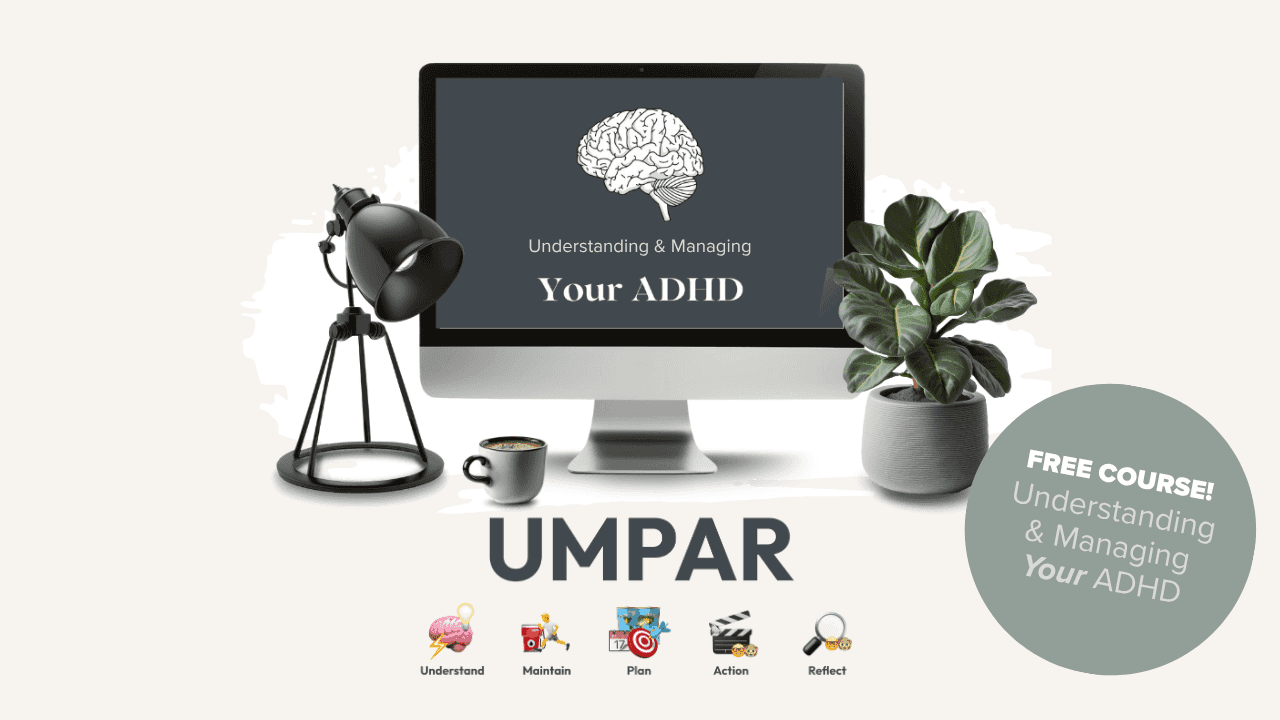
The programme follows the UMPAR framework: Understand & Uncover how your ADHD brain works (including the “chimp brain” vs “human brain” lens and dopamine), Maintain & Move by fuelling your brain and building routines one habit at a time, Plan & Prioritise using the Action Canvas and visual tools (including time-blindness planning), Action & Accountability with barriers, support, motivation and an “emergency backpack” reset plan, and Reflect & Repeat to learn from wins and adjust.
Participants get a workspace, drip-fed videos, group coaching calls, live Q&A, and community support across four themed weeks.00:00 Podcast Ep 11700:08 Welcome to Challenge00:47 What Is Canvas02:03 ClickUp Visual System04:24 UMPAR Framework Overview05:56 Brain Systems Explained08:25 Fuel and Habits10:06 Plan and Prioritise12:10 Action and Accountability13:25 Emergency Backpack16:01 Reflect and Repeat18:30 30 Day Breakdown20:15 Sign Up and Start Date
Join the 30 DAY CHALLENGE
https://go.adhdgoals.co/30-day-challenge-adhd-canvas
Need Help with your ADHD?
Visit my website: https://adhdgoals.co/
Book a FREE call intro call : https://adhdgoals.co/free-intro-call-booking/
FOLLOW ME
Instagram: https://www.instagram.com/adhd_goals/
TikTok: https://www.tiktok.com/@adhd.goals
Facebook: https://www.facebook.com/adhdgoals/
LinkedIn: https://www.linkedin.com/company/adhd-goals/
[00:00:00]
Welcome to Challenge
Laurence Pratt (2): Welcome to another episode of the A DHD Goals podcast. in the last episode, I did announce that there will be a 30 day challenge starting on June the first.
So, just to let you know, this episode is actually a video. And if you wanted to, pop over to Spotify and watch it on there or go to YouTube, you might, get a bit more detail in there.
So without further ado, let’s jump into the episode.
Laurence Pratt: Alrighty, welcome to the ADHD Canvas 30 Day Challenge.
What Is Canvas
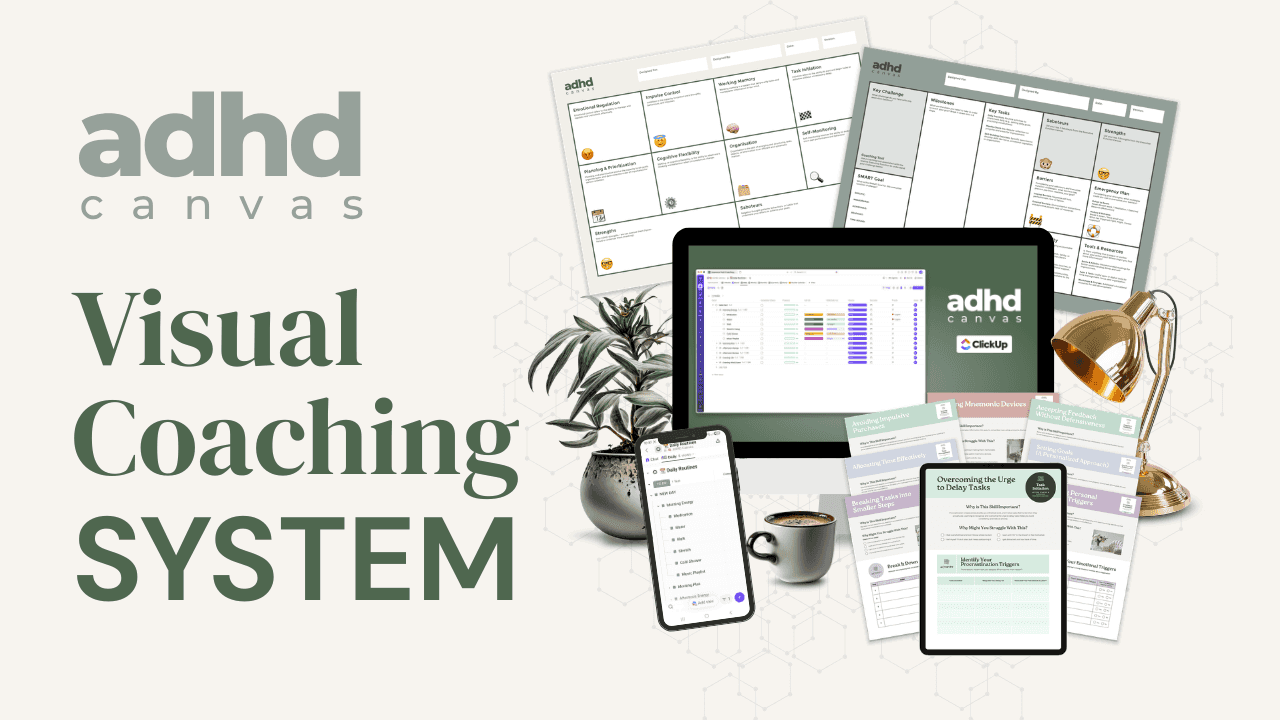
Laurence Pratt: So what is the ADHD canvas? Well, it is a visual, ADHD coaching tool. And it allows you to get [00:01:00] your ADHD out of your brain so that you can see it visually on the canvas. And once you can do that, you can actually spot the patterns in your own ADHD.
So, this is not, just generic, tips and advice that you are gonna get online. you are gonna understand your own ADHD, actually spot the patterns of your own ADHD behaviour. And then once you’ve spotted those patterns, you can then start to work on some of those executive function challenges and you can visually map out how you are going to take action and start managing some of those executive function challenges.
Not only that, you can start to build healthy daily habits that are gonna fuel your brain. This is gonna help you to manage those executive function challenges. And not only that, it allows you to track the [00:02:00] tasks and reminders on any device.
ClickUp Visual System
Laurence Pratt: So what do I mean by that? Well, what I mean is those visual tools actually live inside, a task management, application called clickup.
So you’ve got the best of both worlds. You can track tasks and reminders, but you can actually visually map them out on these whiteboards, on the canvases inside the one system. So you’re not doing it twice, you’re not, writing it down and planning it out visually, on a piece of paper. You’re doing that in the tool that’s actually gonna help you, remind you to stay on track.
So we’ve got the action canvas and the overview canvas there. and this is what I mean, if you looking, you can actually turn those tasks that you are using on your sticky notes, those bits of information, you can actually turn those into tasks where you are actually planning out visually. and then that’s a different view [00:03:00] of all the executive function challenges that you’re gonna work on.
they all get created as you are working, on the canvases and inside each of those challenges. you’ve then got the guide to how you then begin to management manage them. And you’ve got lots of different coaching tools at your fingertips there as well. And inside, Clickup, you’ve also got some really cool visual tools that can just help you, again, help you work through that planning.
If you can see it, you can understand it. Uh, so there’s lots of mind map tools and there’s also really, really useful, tool for time blindness where you can actually drag out, tasks and milestones that you’ve got to do. And you can actually see how long it’s gonna take you to do those.
And then overall, how long it’s gonna take you to finish that, challenge or project or whatever it is that you are working through. So it really [00:04:00] helps you to actually start, you know, rather than just writing a generic, to-do list, it actually puts some dates and times, and you can visually map those out, with some of these really cool tools in there.
And as I said, it’s also on every device. You can use it in the browser, you can zoom, use it on a desktop app and you can use it on your phone. So everything lives inside. click up.
UMPAR Framework Overview
Laurence Pratt: And it’s brilliant.
So how does this system work? what is the framework that it works on? Well, it’s the UMPAR framework, and I’m gonna explain what each stage is. First of all, you understand and uncover this is basically trying to understand how ADHD works and how your own ADHD works. Then we move on to maintain a move that is essentially how we fuel our brain to be act able to actually put some of these plans into action.
And then in order to make a plan, we’ve gotta help, visually map out how to [00:05:00] plan, but also more importantly, how to prioritise a lot of the work that goes into, managing, our executive function challenges. But then of course, we’ve gotta actually start taking action. That can be one of the points at which people with ADHD tend to, fall flat.
so we’re gonna learn how to take action and also more importantly, how to be accountable, how to be accountable to ourselves, but also how, how to get support in that accountability as well. And finally reflect and repeat because we tend not to, look back on what went well or what didn’t go well, and we can end up repeating the same mistakes over and over again.
But what we are gonna do is we are going to build in some moments of reflection so that we can actually learn, so that when we go through and move on to the next challenge, we learn a little bit more about ourselves and we can improve.
Brain Systems Explained
Laurence Pratt: So in a little bit more detail then. [00:06:00] All those stages of, UMPAR understand and uncover.
So we’re gonna learn how does the brain work? How does the ADHD brain work? What’s the difference between the two?we’re gonna look at the two systems of the brain. Okay? So if you have read Daniel Kahneman’s, thinking Fast and Slow, he calls them system one and System two. or if you’ve read the Chimp Paradox by Professor Steven Peters, uh, he calls it the human brain and the Chimp brain.
But understanding those two elements of our brain is gonna be really, really important for understanding our own ADHD because we’ll be able to look through that lens and understand when each one of those systems is in charge. And basically, if we look at how the chimp brain works, it’s an in instinctual, impulsive and autopilot mode for our brain, because the human brain requires a lot of fuel.[00:07:00]
And with ADHD, we’ve got, reduced dopamine receptors. So that means that we’ve got less fuel, less dopamine to fuel that part of our, that logical part of our brain. And so we are spend most of our time or a lot more of our time, with the chimp brain in control. And the chimp brain, it’s instinctual.
So it’s fight, flight, or freeze. And if you, if you analyse, fight, flight, or freeze, you’ll realise that a lot of your executive function challenges are in some way related to those. So understanding which system is in charge, uh, when we’re having our specific challenges is gonna be really important.
And so, like I say, we are going to use the ADHD canvas, the overview canvas to understand your own ADHD brain, not anybody else’s. This is not generic advice that you can get off, uh, social media and the internet. For somebody, it’s gonna be how can you build the [00:08:00] system for the way your brain works? And like I say, if we can understand what triggers your own executive functions, whether it be a fuel issue, or whether it be our chimp,being scared, fearing that something’s gonna go wrong, then we can know how best to manage, start managing that challenge.
Fuel and Habits
Laurence Pratt: So maintain a move. Okay, so this is all about fueling the brain. Okay. So what causes my dopamine to drop? We’re gonna understand that. We’re gonna say, look, take a look at what habits can refuel the brain. And it’s not just dopamine that we need for a healthy brain. It’s also oxytocin, serotonin, endorphins.
And those can help support the dopamine production, but also help, support us having and maintaining a healthy lifestyle. Uh, and we’re gonna figure out how we can actually build a daily routine that we can [00:09:00] stick to. I’m sure we’ve all tried to, build a daily routine, but it’s very hard. and we tend to do everything all in one go.
A bit like, new Year’s resolutions in January. We try and change our life in massive ways, and then as soon as we hit a roadblock, we stop, and then we feel like we failed, so we quit. So, how do we maintain a routine? Well, we are gonna do it slowly. We’re gonna build one habit at a time so that we can build up to that daily routine in a, a small steps.
And what can we do if routine breaks? Well, I’m gonna come into this concept, in a bit more detail later on, but I call it the emergency backpack. And it’s what we can do for ourselves to reset when we realise that either we’ve, skipped,part of our daily routine, or we feel like we failed in some way, or we’ve figured out that maybe the novelty has worn off.
What can we [00:10:00] do to get back into it? And we will use this analogy of an emergency backpack later on.
Plan and Prioritise
Laurence Pratt: So the next step in detail is plan and prioritise. So we’re gonna be using the Action Canvas to plan and prioritise how we are gonna tackle these executive function challenges. So from the overview board, we will have prioritised which one we should work on first, and then we are gonna take that and analyse that on the first action canvas.
So we understand the challenge when we’ve got a series of different executive function coaching tools that will help us understand that specific challenge in more detail. Then we are gonna set ourselves a goal, okay, what is it that would change our lives in re regard to this executive function challenge that we’ve got?
What is our goal for this challenge? And then we’re gonna plan out what small steps could we take to get [00:11:00] there? Okay? Break it down into smaller steps and it seems less, of a big mountain to climb. And then we’re also gonna identify which tasks that we need to do in order to reach each one of those milestones.
And eventually our goal. And like I say, we’re gonna figure out how we can prioritise those, tasks so that we can do the important ones first. Uh, we’ve got All visual tools and impacts and effort scale makes it easy to figure out which one of these tasks I should be doing today.
Um, but basically also figuring out what order we might need to do them and, and are any of these tasks gonna need one task to be done first before you can reach the next stage. And all those are visual tools that you can use. And like I say, all of those live with inside the clickup, workspace that you’ll be working with.
So depending on whether you like to do it on the canvas itself, will you actually start [00:12:00] using, the, the Clickup tool itself? You’re gonna be able to begin to,plan, your action plan with ease. A
Action and Accountability
Laurence Pratt: nd sticking with the action canvas, we then look at the A of, UMPAR, which is action and accountability because it’s all well and good creating a plan.
We’re all good at writing to-do lists. We’ve probably written, four or five different, uh, to-do lists in the last couple of days, and we never go back to them. so it is all well and good that we might have actually made this plan, and we might stop right there and say, okay, well that’s my problem solve.
But really part of the action and accountability is looking at where that plan might come unstuck, and how are we gonna stay accountable. So, going back to the lens of looking through those two systems in our brain, our [00:13:00] strengths and our saboteurs, once we understand those from the overview canvas, we’re gonna look at this specific challenge and understand what it is,this particular challenge represents for us and where we might hit some barriers.
And we’re gonna identify what those barriers might be. And then we’re gonna identify what we are gonna put in our emergency backpack for when we do. S
Emergency Backpack
Laurence Pratt: o. The analogy I like to use for the emergency backpack is if, if you have ever gone on a road trip, but if you take a, a young child on, uh, a long drive, a road trip, at some point that child is gonna get bored, thirsty, hungry, and it probably will lead to a meltdown.
Now, if ever we’ve been in that situation and, uh, a child has had a meltdown, then, it can feel awful. It can ruin the, the journey could even ruin the day. And what we [00:14:00] learn from that is perhaps next time when we go on that road trip, we might want to take with us an emergency backpack. And in that we might put some, you know, drink of water, some snacks, and maybe some, books or puzzles or games to entertain, the child.
So really, we are trying to look at, we’re trying to be the designer whilst we, we are using our, our logical part of our brain. We are designing for our, when our chimp brain is in control, and we’re gonna figure out what it is, what it needs in those moments. And we’re gonna make accessible to us all those tools in our emergency backpack.
And we’re gonna figure out how we’re gonna stay accountable. Who can we, Recruit on board. Who can we tell what, how that we are doing this challenge and get a bit of moral support and help celebrate some of those wins. And also, what are we gonna do to motivate ourselves? Are we gonna actually treat [00:15:00] ourselves when we hit a particular milestone?
So how can we stay accountable and motivated? And also what are the tools that we’re gonna need to succeed whilst we go through and start executing on that plan? Because, whenever we, make a vague plan or there are parts of it that we don’t understand or haven’t quite figured out yet, then uh, when we reach those points, that can be a point at which we, our chimp gets scared and it shuts down.
It free freezes, fights, flight, or freezes. So what we’re gonna do is we’re gonna identify what tools we’re gonna need during our challenge and identify if there are any areas where we need to learn a little bit more. Or at some point we are gonna need to figure out something else. And so we were gonna make a note of that so that when that time comes, we’ve got less of a step to reach it.[00:16:00]
Okay.
Reflect and Repeat
Laurence Pratt: And then the final step of UMPAR is reflect and repeat. quite often with ADHD, we never look back on, uh, we, complete a project and then we move straight onto the next one and we start the same cycle over and over again. But what we’re gonna do is we are gonna factor in and we are gonna, place in our process moments where we can reflect.
It could be daily reflection, it could be a weekly reflection. It could be when we hit a different milestone. But we’re gonna programme those into our challenges and we’re gonna ask ourselves what went well. ’cause we rarely celebrate the wins. We tend to only remember what could have gone better. but we need to identify both of those things and then ask ourselves, well, how can I adjust my plan, in order to, to get to where I’m going now that I know what’s working and what [00:17:00] isn’t?
And repeating that reflection will allow us to start learning something about ourselves. It helps us to understand about what situations have, what triggers and what, particular situation triggers, uh, what tools that we, use to get ourselves out of, out of those. Whether it’s we can’t do things when we’re tired.
and what messages we need to give to ourselves in order to, calm down the chimp and refuel. Okay. And what we want to try and remember is that this is a system where we keep repeating and, optimising basically, where we tend to, where other systems tend to, you know, we tend to drop off and stop.
And like I say, when you’re trying to do a New Year’s resolution, we make it too hard. And then as soon as we hit a war, we feel like we’ve failed [00:18:00] and, we stop. But basically we are, we’re gonna, we’re not gonna have that mentality. We are basically gonna ask ourselves what worked in that experiment, what didn’t work?
And then how can I use that to, make the next experiment better? And so we’re improving, we’re not failing Every piece of information is data and insights into understanding ourselves more.
30 Day Breakdown
Laurence Pratt: So what happens during the 30 days? Well, as soon as you sign up, you will get access to your workspace and all the tools and you’ll be able to get set up in your workspace.
And also we’re gonna schedule in, uh, for group coaching calls where you can basically, you’ll have all the course videos that come, at the beginning. And those will be dripped out through the four weeks. And you’ll also get a chance to jump [00:19:00] on the, group coaching call live q and a. We can ask any questions or run through any bits where you get stuck and you’ll be able to, chat in the community as well with all the people that are doing the challenge with you.
But let’s have a look breakdown of, each of the weeks. So week one is understanding your ADHD brain. So that’s where you’ll map out your own ADHD brain and, and have that eureka aha moment. And then week two, we are gonna start looking at how to build, a daily habit routine, which is gonna refuel the brain.
Then we’re gonna look at how we can start planning and prioritising and taking action on your biggest ADHDexecutive function challenge. And then in week four, we are going to look at that reflection process so that we can repeat this process in cycles and go through all of those executive [00:20:00] function challenges that you have outlined in your overview canvas, and begin to build up a repeatable routine for yourself, to help you begin to thrive.
Okay?
Sign Up and Start Date
Laurence: So all that is left to do is to go over, and sign up to the ADHD Canvas 30 day Challenge. It starts in the 1st of June. I can’t wait to see you there. Well there, we have it. Thank you so much for listening this far. If you want to hear more episodes, then please subscribe on YouTube or whatever podcast platform you use. It really helps us spread the word. So if you know anyone, this episode could help, then please share it with your friends. If you want to follow me on social media, I am on Instagram at ADHD underscore goals. And you can find me on Facebook too. If you want to get into touch with the show, then you can email me at [00:21:00] hello@adhdgoals.co And finally, if you’re struggling to manage your ADHD and you would like me to be your coach, then please head over to my website and get in touch. Until next time. Bye for now.